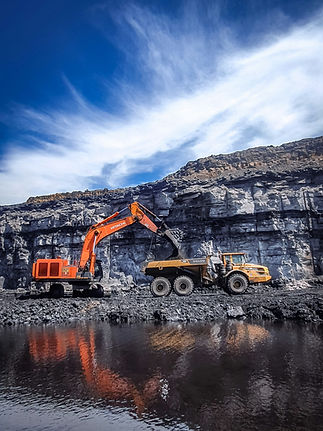
Key issues affecting the essential minerals industry
Essential to daily life
Essential minerals are required in large volumes across every part of the economy, yet they are often overlooked or taken for granted. By contrast, critical minerals such as lithium for batteries attract more attention because of their high value and restricted supply.
Economic and social value
Minerals underpin housing, infrastructure, manufacturing, agriculture, water and energy supply. They contribute billions of pounds to the UK economy and support hundreds of thousands of jobs directly and through supply chains.
Public understanding
Minerals are often overlooked compared to the industries that rely on them. Raising awareness among government, regulators and the public is vital to ensure policies support a secure, sustainable supply for the future.
Supply must be managed
Minerals cannot be assumed. A steady and adequate supply requires forward planning, timely permissions, safeguarded infrastructure, and an efficient, well-resourced regulatory system. Without this, shortages will threaten housing, infrastructure and investment.
Domestic supply
The UK’s geology provides most of the essential minerals we rely on. This secure, home-based supply supports resilience, reduces exposure to global risks, and strengthens the UK’s ability to meet its own needs.
Scale and continuity
Minerals and mineral products represent the largest material flow in the UK economy — around 1 million tonnes every day. Over the next 25 years, meeting demand will require at least 8 billion tonnes of mainly construction and industrial minerals, supported by effective policies and planning.
Our priorities

Growth & Development
Minerals are the foundation of modern life. They provide the raw materials for homes, schools, hospitals, transport networks, commercial buildings and national infrastructure.
Without a steady and reliable supply, economic growth and investment are at risk. From aggregates in concrete and cement to clays for bricks and ceramics, minerals underpin the UK’s ability to build and to thrive.

Nature Recovery
Although mineral extraction covers less than 0.5% of UK land, the industry plays a leading role in restoring and enhancing the natural environment.
Quarries and former extraction sites are routinely transformed into wetlands, woodlands, grasslands and nature reserves. These restored landscapes provide habitats for wildlife, improve biodiversity, and support national nature recovery goals.

Net Zero
The transition to a low-carbon future depends on minerals. Offshore wind farms, nuclear power stations, grid upgrades and sustainable construction all require huge volumes of concrete, aggregates, steel and other mineral-based materials.
By ensuring minerals are recognised as vital to the net zero transition, UKMIG helps secure the resources needed for renewable energy, green infrastructure and a sustainable future.
Looking ahead
To achieve a secure and sustainable future for UK minerals, government, regulators and industry must work together to:
-
Recognise essentiality: Minerals and mineral products are fundamental to the economy, quality of life and the transition to net zero.
-
Plan and manage supply: Provision cannot be assumed; it must be planned, monitored and managed through the land use planning system.
-
Ensure steady and adequate provision: Maintain reliable supplies by granting timely permissions and safeguarding critical infrastructure.
-
Create supportive conditions: Establish policy, operating and trading environments that allow UK industry to thrive and invest in future supply.
-
Recognise the legacy of restoration: Restored extraction sites deliver environmental, social and economic benefits that extend far beyond their operational life.
Of overriding importance is the need for a clear national minerals policy and a statement of need. These would provide a consistent framework for national, regional and local planning — ensuring sufficient minerals and mineral products are supplied to the sectors that depend on them.